A Walk around Baghdad

Back in travel writer mode…
I’m spending six days in Baghdad, Iraq. I had been meaning to visit for a while but what with the ever-changing political situation, plus my adoptive dad getting more ancient still, I didn’t do it last winter. Then I read an article in the FT saying that tourists were coming to see Babylon, so I thought - why not? Later on, I realised that the article was a few years old, and that the UK Foreign Office were recommending that no one travel there. But by then I’d already booked.
The city is not unlike Cairo, which isn’t too flattering a thing to say. But Arab cities are anyway not for those who seek peace and tranquility. They are for those who revere street culture. And no one does street culture like the Arabs. They are the true masters. The huge market, running the whole way along Khulafa Street, is one example. Presumably, back in the day, stall vendors simply shouted out their prices. Then, one day, one chap bought in his own mini sound system and played the prices out, setting it to auto-repeat every five seconds, volume cranked up full. Within a week no doubt, the whole street followed suit. Resulting in a discordant cacophony that pursues you, subtly shifting, as you walk down the street and makes you shake your head in wonder at those who work in this environment all day long.
Eventually, you come to Amin Square, where you can escape the vendors’ racket and head south into Al-Mutanabbi - the bookseller’s district. It is a bit quieter and more like the kind of city area that the average Westerner will wax lyrical about, stalls of book vendors peacefully trying to shift their wares without assistance from bluetooth speakers cranked up to the max. I have a vanilla iced latte from the Penguin cafe (no doubt unlicensed), about halfway up Al-Mutanabbi Street, and drink a couple of small bottles of water. It’s 35 degrees, even in mid October. The cafe has a balcony set pleasantly above the fray and is to be recommended.
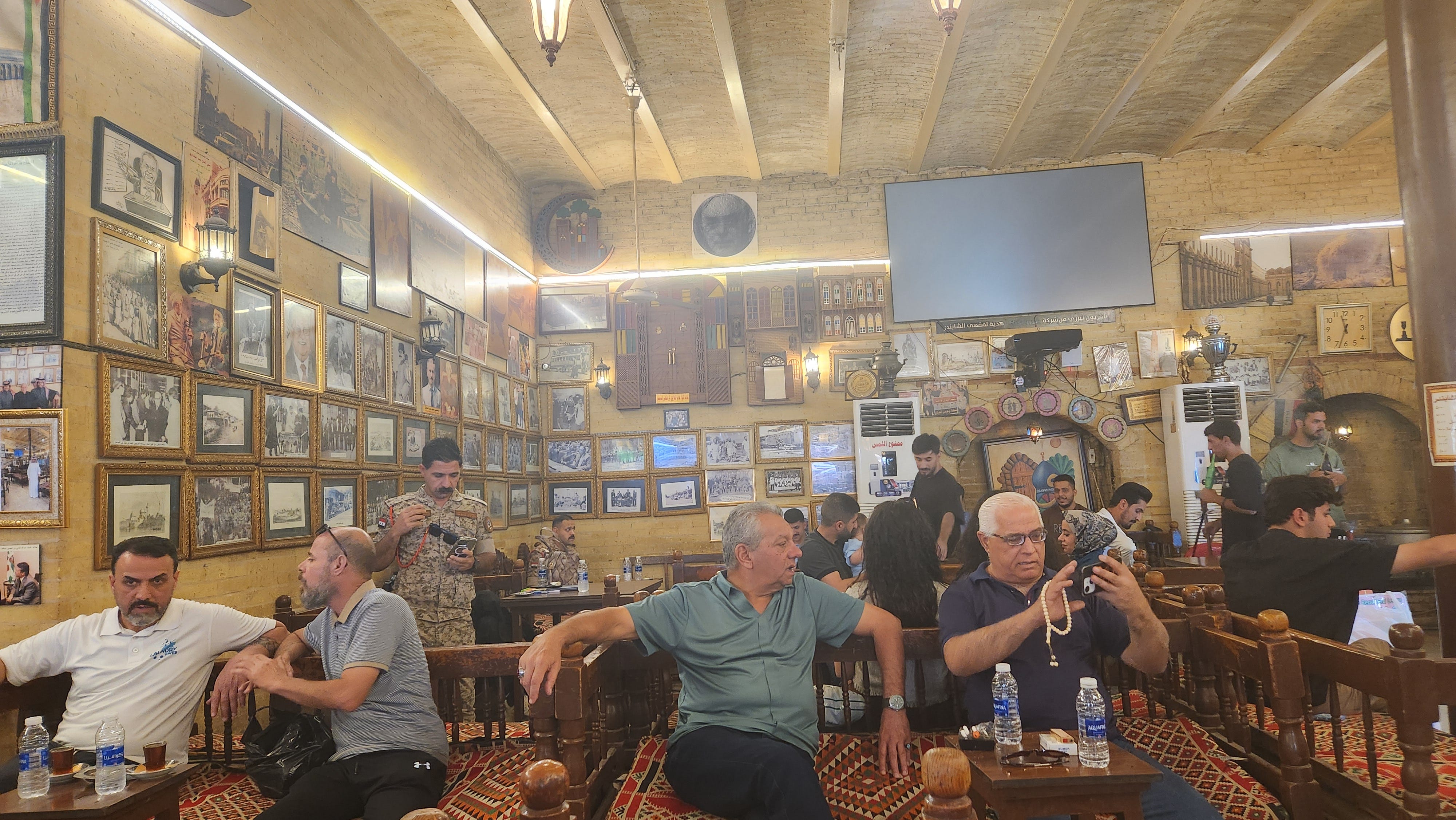
A hundred metres south, I come to the famous Shabandar Cafe - a traditional Baghdadi establishment, rammed full of locals consuming shisha or heavily-sugared cardamon chai. It looks as old as the hills, and is filled with framed old pictures, but was actually rebuilt after being destroyed in a car bombing in 2007.
Sugared up, I head along the streets of the renovated district next door and back around until I come onto Al-Rashid Street which, along with Al-Hamra in Beirut, is likely one of the most famous streets in the Middle East. Built in the dying days of the Ottoman Empire, during World War 1, this 4km long thoroughfare, like it’s Lebanese counterpart, has undoubtedly seen better days. Back in the 50s, when Iraq was last a kingdom, it was a vibrant cultural centre filled with bustling coffeeshops, theatres and restaurants, playing host to the rich and famous from all over the world. Now it is a decayed remnant of its former self, though a new tramway project, currently happening, hopes to revive it. Yet, to stroll along this street is an immersive experience of the Baghdadi past nonetheless.
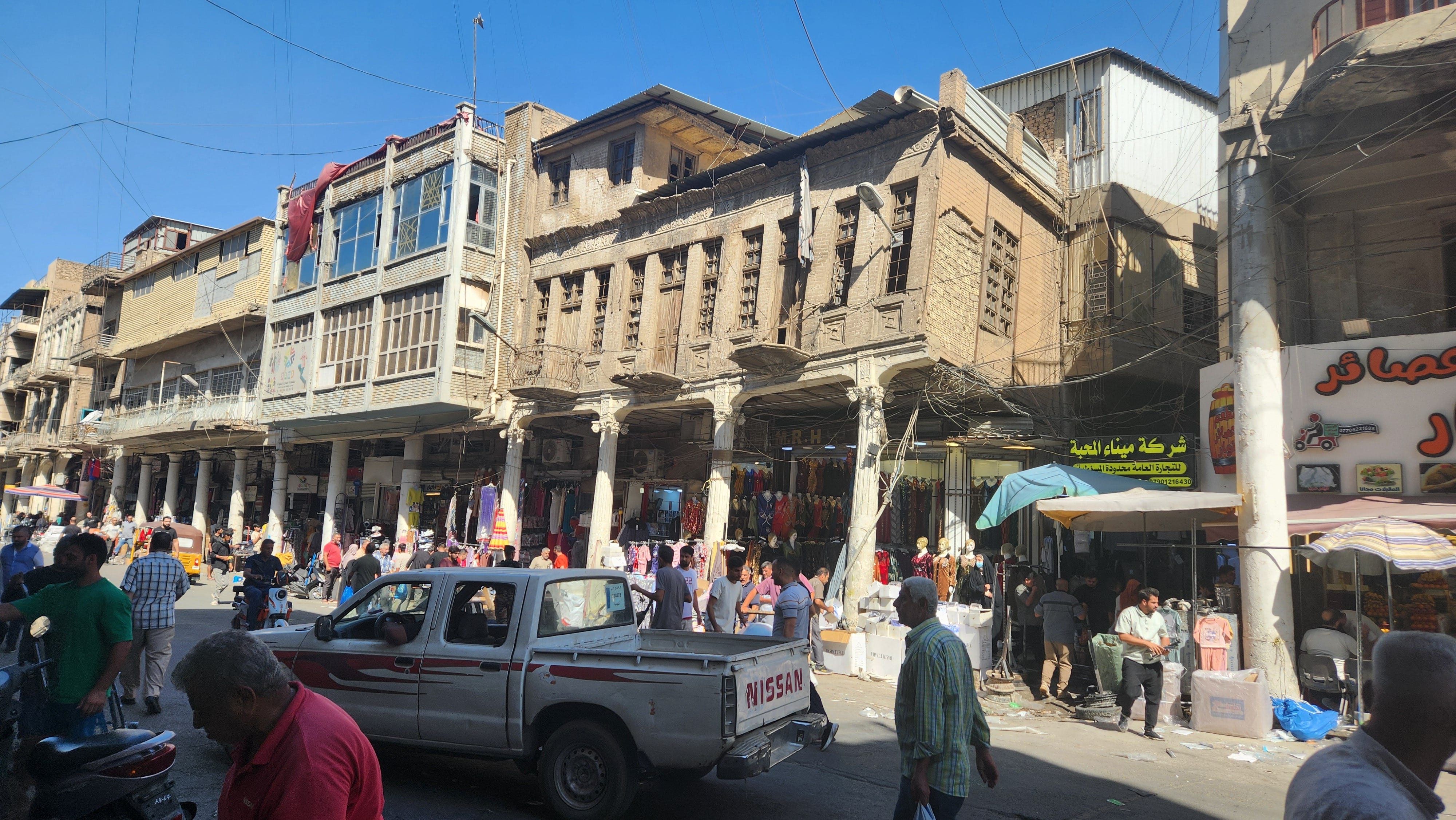
For pretty much its whole length, the buildings along Al-Rashid street overhang the pavement and are supported by ancient columns on both sides, creating the sense of a covered walkway. The buildings are dilapidated and, by the afternoon, the street has the sense of a ghost town, just a few animals scrabbling through piles of garbage. Yet a feeling of how great a thoroughfare this once was remains present, testified to by the old fancy stonework that adorns the buildings slowly crumbling to dust.
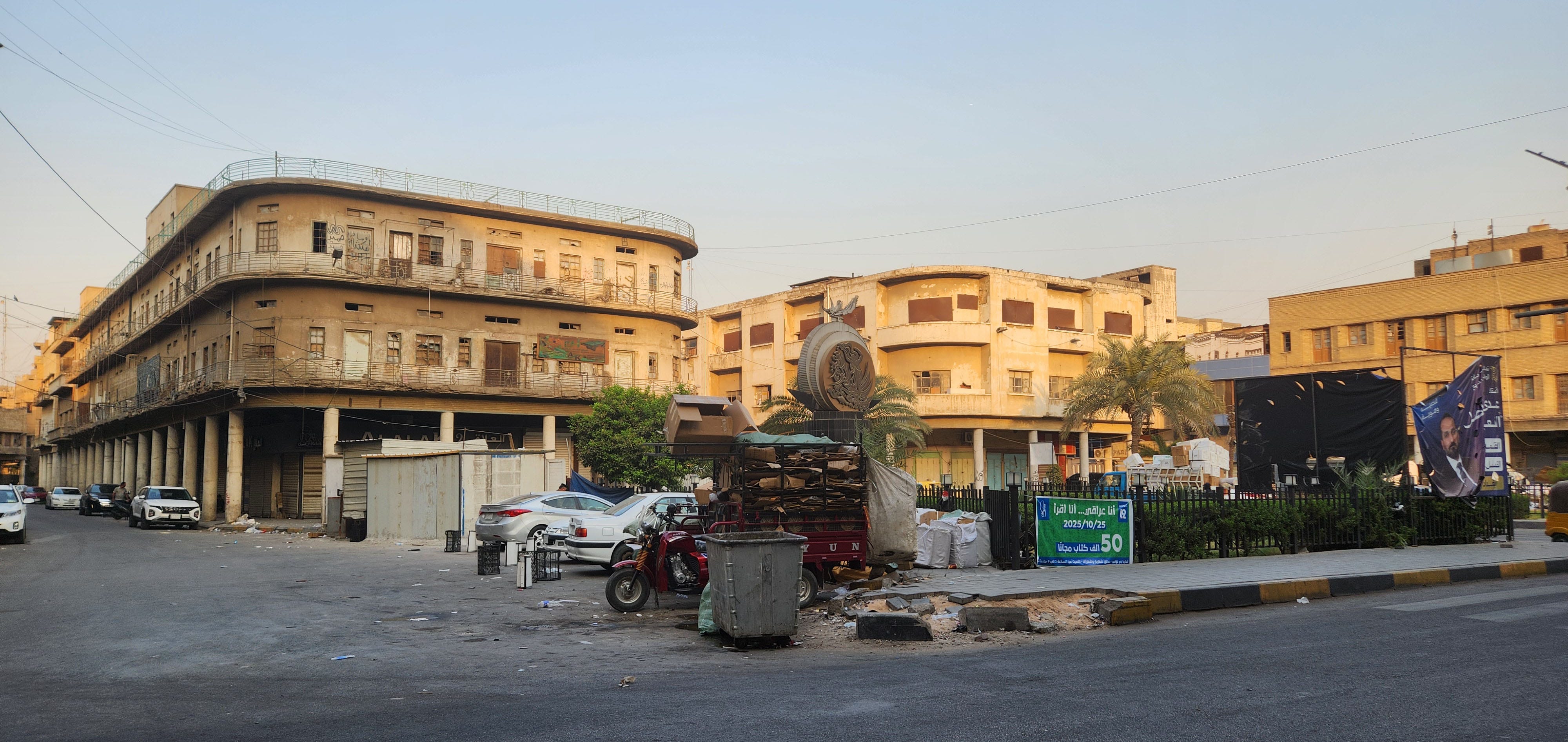
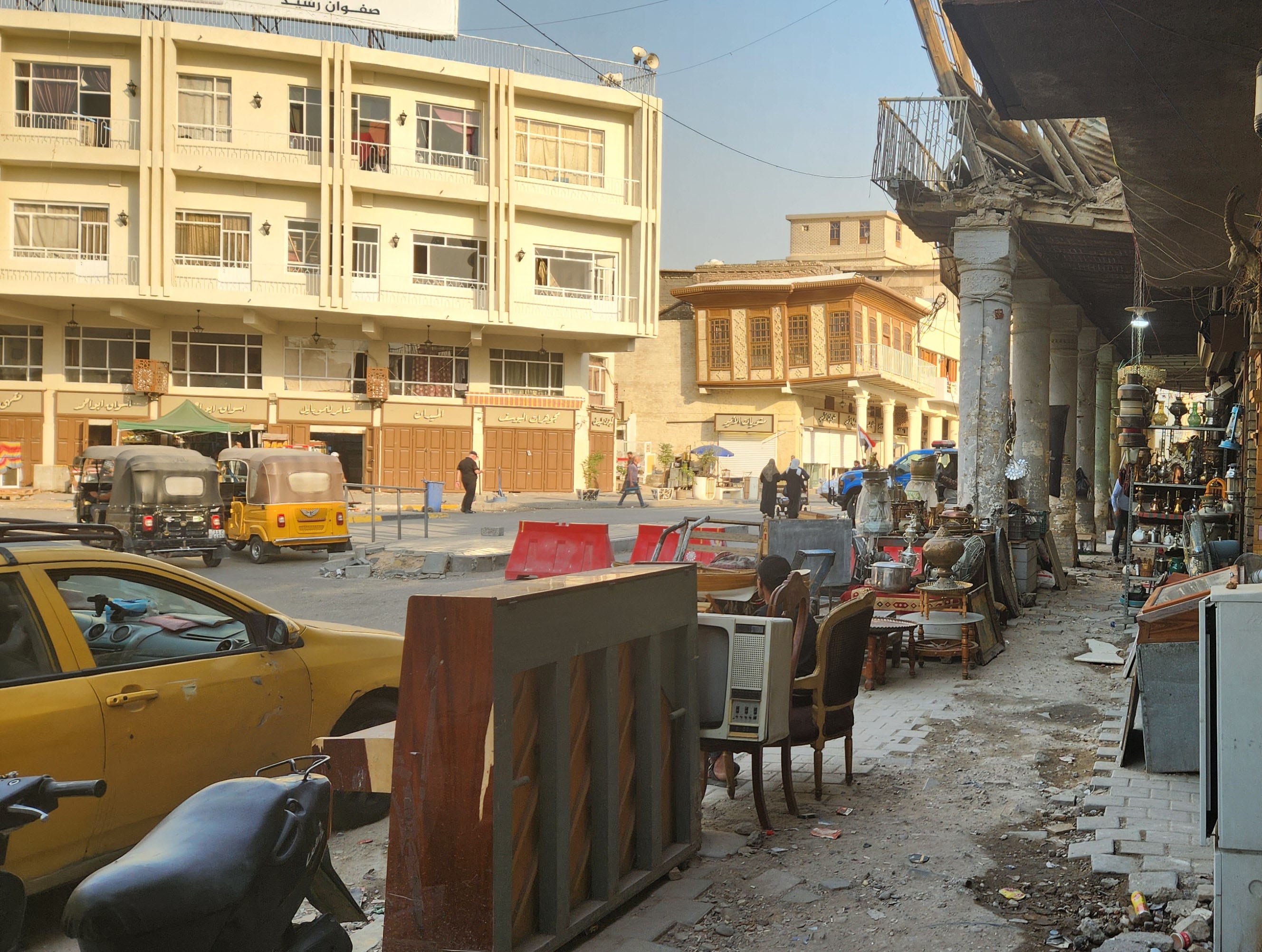
I felt myself captivated by Al-Rashid, drawn to walk along it a few times before I checked online and discovered its history. In my mind’s eye, I can somewhere see the past that Al-Rashid enjoyed, a street full of glamour and romance.
The remaining Baghdad streets are literally crammed with posters, political candidates gazing out at you wherever you look. There are so many parties for next month’s election that each has to be given a three-digit number in Arabic.
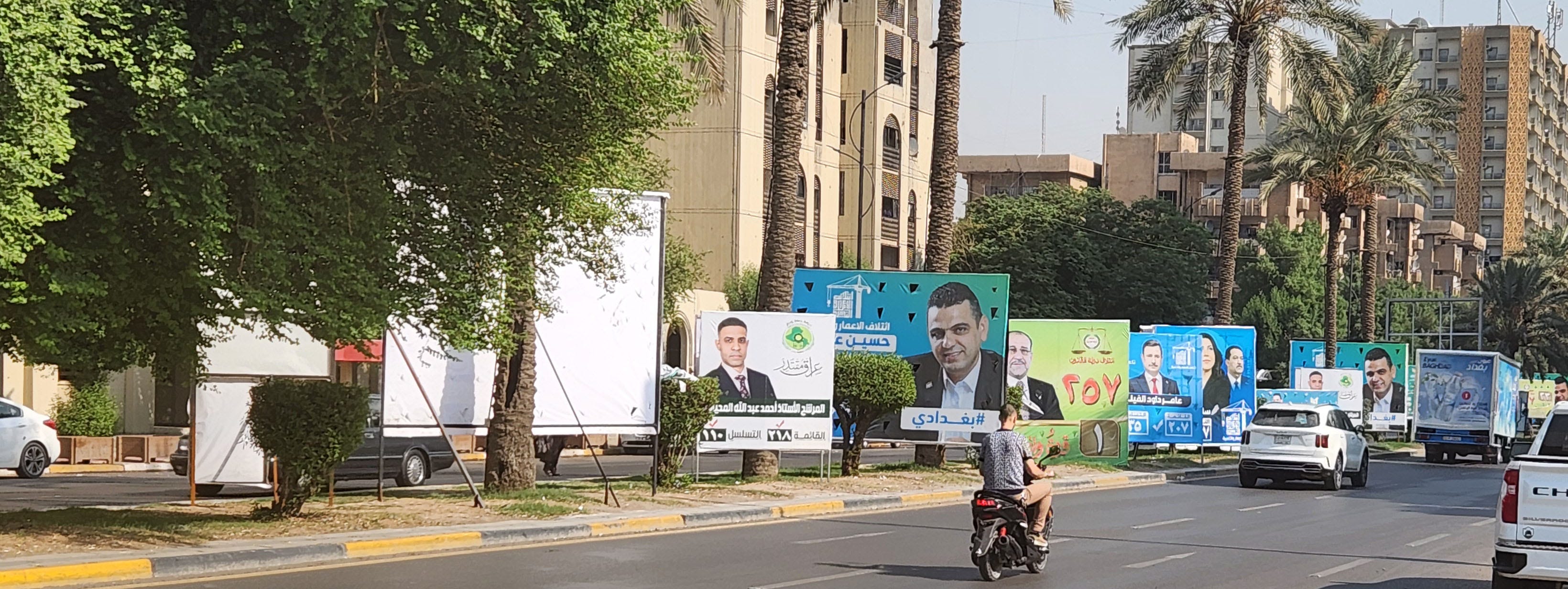
Glancing at the posters, you get a feel for each candidate and party - the business-suited type offering progress; the Islamic woman, conservatively dressed; the slightly overweight man-of-the-people type; the various clerics - some looking benign, others ready to deal with non-believers; and the more progressive woman, sporting long hair and no head-scarf.
Who do you think should win, I ask an aging cab driver who speaks English. It makes no difference, he informs me. Nothing will change. The Middle East needs kingdoms, he explains. These republics are all unstable, all corrupt. Look at Saudi, Qatar, even Morocco. Kingdoms. Nothing else works round here.
He may be right.
Useful Baghdad Travel Info
Careem is the local taxi app. No Uber here. Gives you an idea of the fare, though it seems to be lower in practice.
My hotel internet and Airalo Iraq e-SIM worked pretty good.
Hotels seem pretty pricey for what you get on booking.com and hotels.com. Generally about $50/night for a single with bathroom. I stayed in the Malik Dijlah, offering views over the Tigris but with a reasonable level of street racket. I’ve read stories of places half this price between Sadoun and Nidhal but also that it’s a rougher area.
Tourist Day Trips to Babylon or other sights seem to no longer be operating, presumably due to a general lack of tourists. I saw some Chinese tourists (poutonghua speaking) but no other Westerners in my time here. So travel to the Alawi bus station and get a shared taxi to Hillah, about $5. From there, get a local cab to take you to the site, about $3. You have to pay IQD 25k (about $18) to enter. You could also check Careem for an English-speaking driver for the day, which would likely be safer.
The airport has very high security, so expect to be stopped many times on the journey back. On arrival, cab companies in the airport will ask a rather extortionate IQD 50k ($40) for the fare into town (many even more).
The Iraq Museum is closed, the guy in the office didn’t have much confidence about when it might reopen. Maybe six months, he shrugged.
Don’t miss the huge Shia mosque and shrine, Imam Al-Kazim. An incredible experience, heaps of the faithful reaching to touch the tomb room in the middle.
I wouldn't have the guts. Bravo. Good observation about kingdoms, rings true.
I wrote this after listening to a radio podcast with a man who had been there , and done that .